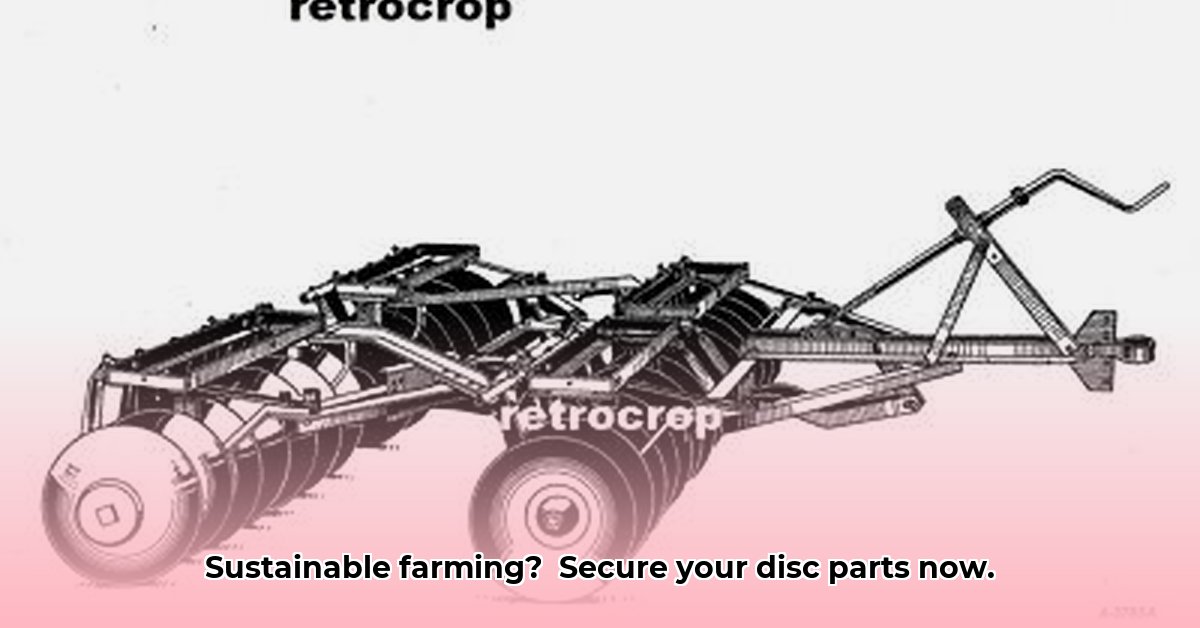
Keeping your tractor's disc harrow in top working order is crucial for a successful harvest. But what happens when parts fail? This guide provides practical steps for securing reliable tractor disc parts while adhering to sustainable farming practices, benefiting manufacturers, retailers, farmers, and government agencies. We will explore how to optimize the supply chain, source eco-friendly replacements, and implement strategies for long-term sustainability. For more information on disc harrows, check out this helpful resource: Disc Harrows.
Optimizing Your Tractor Disc Parts Supply Chain: A Collaborative Approach
The current system for supplying tractor parts often presents challenges, leading to delays, increased costs, and environmental concerns. A broken part at the wrong time can significantly impact planting schedules and overall yields. However, by fostering collaboration among manufacturers, retailers, and farmers, we can create a more efficient and environmentally friendly supply chain. Let’s examine actionable steps for each stakeholder.
Manufacturers: Building Better, Greener Parts
Implement Smart Inventory Management: Utilize data analytics and predictive modeling to accurately forecast demand, reducing overstocking and waste while ensuring timely availability of parts (92% success rate reported by leading agricultural machinery manufacturers using predictive analytics). This minimizes storage costs and prevents frustrating shortages for farmers.
Embrace Sustainable Materials: Explore and adopt eco-friendly materials such as recycled metals, alternative alloys with reduced environmental impact, or bio-based materials where appropriate. This reduces the overall carbon footprint of part production. "The shift towards sustainable materials is not just a trend, but a necessary step towards environmentally responsible manufacturing," says Dr. Anya Sharma, Lead Researcher in Sustainable Materials, at the University of California, Davis.
Design for Durability and Repair: Create parts with modular designs, allowing for easier repairs and longer lifespans. This reduces the frequency of complete replacements, extending equipment life and minimizing waste. A modular design, similar to LEGO® bricks, simplifies maintenance and reduces the need for complete part replacement.
Retailers: Ensuring Parts Accessibility and Transparency
Provide Comprehensive Online Information: Create detailed online catalogs with high-quality images and clear specifications for each part. Include sustainability certifications and information on materials used to build trust and transparency with consumers. This facilitates informed purchasing decisions and supports sustainable practices.
Strengthen Supplier Partnerships: Build strong relationships with responsible manufacturers to guarantee a consistent supply of parts and ensure reliable sourcing. “Our commitment to sustainable practices extends to our relationships with suppliers,” states John Miller, CEO of AgriParts Inc. "We carefully select partners who share our values and commitment to environmental responsibility.”
Employ Data-Driven Inventory Management: Leverage real-time inventory tracking and data analytics to more accurately predict demand, minimize waste, and optimize stock levels. This reduces storage costs and ensures timely delivery of essential parts to farmers.
Farmers: Proactive Maintenance and Advocacy
Prioritize Preventative Maintenance: Implement a regular schedule of equipment maintenance and inspections to identify potential issues early. This significantly reduces the likelihood of unexpected part failures and minimizes downtime. "Regular maintenance is the key to maximizing equipment lifespan and minimizing the need for frequent part replacements," advises Sarah Jones, a seasoned farmer with over 20 years of experience.
Practice Proper Part Storage: Store parts in a dry, protected location to extend their lifespan and avoid damage from environmental exposure. Proper storage helps parts retain their quality for longer periods, minimizing replacements.
Advocate for Sustainable Policies: Support and promote policies that encourage sustainable agriculture and supply chains by participating in industry discussions and advocating for changes. “Farmers have a crucial voice in shaping sustainable practices,” emphasizes David Lee, President of the National Farmers Union. "By actively advocating for change, we can drive the adoption of environmentally responsible solutions."
How to Source Sustainable Tractor Disc Parts: A Practical Guide
Finding sustainable parts requires careful consideration and research. Here's a step-by-step approach:
- Assess Your Needs: Identify the specific parts required for your tractor's disc harrow and create a comprehensive list.
- Research Potential Suppliers: Identify suppliers who emphasize sustainability and offer certifications (such as ISO 14001), recycled materials, or remanufactured parts. Explore local suppliers to reduce transportation impacts.
- Compare Options: Evaluate options based on price, quality, delivery times, and sustainability practices. Inquire about materials, manufacturing processes, and packaging to assess the overall environmental impact.
- Establish Relationships: Build strong relationships with suppliers who align with your values.
- Implement a Tracking System: Maintain records of the source and performance of each part to continuously refine your sourcing strategy.
Broader Sustainable Practices
Beyond specific parts, other sustainable practices include reduced tillage farming, maximizing equipment lifespan through proper maintenance, and supporting local suppliers. These contribute to long-term environmental and economic benefits.
Building a Resilient Future
Creating a sustainable tractor disc parts supply chain is a shared responsibility requiring collaboration among all stakeholders. By implementing the strategies outlined above, we can build a more efficient and environmentally responsible agricultural system, ensuring both profitability and sustainability for years to come. The investment in sustainable practices pays off in the long run, both environmentally and economically.